The rarest flower colors in nature
7 min read
Contents:
- Quick Answer: What Are the Rarest Flower Colors in Nature?
- Why Are Some Flower Colors So Uncommon?
- Flower Color Chemistry
- Evolution and Selective Pressures
- True Blue Flowers: Nature’s Rarest Hue
- Why Blue is Uncommon
- Famous Blue Flowers
- Table: Blue Flower Availability
- Green Flowers: The Botanical Oddballs
- The Science of Green Blooms
- Rare Green Flower Examples
- Black Flowers: The Mythical Allure
- The Science of Black Blooms
- Stunning (Almost) Black Flowers
- Vivid Purples, Oranges, and Other Rarities
- Vivid Purples
- True Oranges
- Metallic and Iridescent Blooms
- Rarest Colors in Floristry: What Do US Florists Do?
- Dyeing and Tinted Flowers
- Sourcing for Events
- Pull-Quote
- People’s Fascination With Rare Flower Colors
- FAQ: Rarest Flower Colors
- What is the rarest flower color in the world?
- Are there any naturally black flowers?
- Why are blue roses so rare?
- Can I buy rare color flowers online in the US?
- Are rare flower colors more expensive in the US?
- How to Find or Grow Rare Flower Colors in 2026
The Rarest Flower Colors in Nature
Picture a blue rose at a wedding, or perhaps a deep black tulip gracing a kitchen table. These things stop us not just because they’re beautiful, but because they’re astonishingly rare. Nature doesn’t hand out every color evenly. Some hues are stubbornly elusive, the botanical equivalent of a unicorn. In a world where red and yellow blooms fill grocery buckets and online delivery catalogs, the rarest flower colors in nature–blues, greens, blacks, even true oranges and vibrant purples–are the holy grail for florists, gardeners, and collectors.
Quick Answer: What Are the Rarest Flower Colors in Nature?
Among flowering plants, the rarest colors are true blue, green, black, and certain vibrant purples. Pure true-blue flowers occur in less than 10% of all species, while genuinely black flowers don’t exist naturally–most are deep purple or maroon. Green flowers are uncommon because green is the default color for stems and leaves, but rarely for petals. Specific shades, like orange and vivid purple, are also scarce outside a few unique species. Breeding and genetic engineering can produce these colors, but in wild nature, they remain extraordinarily rare.
Why Are Some Flower Colors So Uncommon?
It turns out that flower color isn’t just a paintbox of possibilities. Biology, pollinators, and even chemistry set the boundaries.
Flower Color Chemistry
Pollinator attraction isn’t the only factor–chemistry can be a brick wall. According to Dr. Rachel Turner, horticultural geneticist at the University of Georgia, “True blue pigment doesn’t exist in the natural flower palette. What we see as blue is really a trick of pH and pigment combinations, not a single blue molecule.” Most “blue” flowers manipulate anthocyanins (the pigments behind reds and purples) and their environment.
Evolution and Selective Pressures
Most flowers have evolved to attract the most available pollinators–bees, birds, moths–which prefer certain colors. For example, bees ignore red, which is why true red is also rare in nature outside bird-pollinated species.
Fun fact: Less than 1% of all flowering plants produce black-pigmented petals. Yet, ask any American florist searching for a “black rose” for a Halloween bouquet–you’ll hear a sigh.
True Blue Flowers: Nature’s Rarest Hue
Blue is the color everyone wants but almost nobody gets–at least, not without a little help from modern science.
Why Blue is Uncommon
Anthocyanins, the pigments in most blue flowers, are actually purple. Through changes in pH and by mixing with other chemicals (often metals like aluminum), a flower can appear blue to the human eye. But this is rare.
Famous Blue Flowers
- Himalayan Blue Poppy (Meconopsis betonicifolia): This almost unreal blue is coveted by collectors. In the US, the seed can run $10-$15 for a small packet, sold by premium online nurseries like Annie’s Annuals.
- Delphiniums: Some cultivars bred in the US Midwest boast deep sapphire tones, almost as rare in the wild as the poppy.
- Gentians: Found in alpine meadows, these produce rich, saturated blue.
“The hunt for a truly blue rose remains ongoing; even today, most ‘blue’ roses in American florists are actually white roses dyed with blue pigment,” notes Elena Hart, head designer at Brooklyn’s Wild Ivy Floral.
Table: Blue Flower Availability
| Flower | Natural Blue? | Occurrence in Nature | US Retail Price (per stem, 2026) |
|---|---|---|---|
| Himalayan Blue Poppy | Yes | Extremely rare | $12-$18 |
| Blue Rose | No (dyed) | Never | $5-$8 (dyed) |
| Delphinium | Yes | Rare (cultivated) | $3-$6 |
| Gentian | Yes | Uncommon | $7-$10 |
Green Flowers: The Botanical Oddballs
Walk into a US flower shop–most green “flowers” you’ll see are actually leaves, fillers, or dyed blooms. True green petals are like hidden gems.
The Science of Green Blooms
Chlorophyll is abundant in stems, but not so much in petals. “Green petals risk blending in with leaves, making the flower harder for pollinators to spot,” explains Dr. Turner.
Rare Green Flower Examples
- Green Cymbidium Orchids: These can fetch $8-$14 per stem at online sites like UrbanStems.
- Bells of Ireland (Moluccella laevis): Technically, the green bell is a calyx, not a petal.
- Envy Zinnia: A rare annual that’s grown by seed specialists like Baker Creek Heirloom Seeds.
Black Flowers: The Mythical Allure
Black is the color of mystery, elegance, and drama–and in the floral world, it’s basically a mirage. No flower is truly black.
The Science of Black Blooms
What we call “black” in flowers is usually the result of extremely high concentrations of dark purple or red pigments–anthocyanins again. Human breeders have pushed cultivars closer and closer to black, but nature stops short.
Stunning (Almost) Black Flowers
- Queen of Night Tulip: Deepest maroon, sold in the US for $1.50-$2 per bulb.
- Black Bat Flower (Tacca chantrieri): Looks supernatural–imported specimens at $35+ per plant retail.
- Black Calla Lily: Popular in American Halloween arrangements ($9-$12 per stem, 2026).
Florists often rely on floral spray or dip-dye to create pitch-black bouquets for events and photo shoots.
Vivid Purples, Oranges, and Other Rarities
Some blinding brights that seem common in garden centers are, in fact, rare in the wild. Human selection, hybridization, and even CRISPR gene editing are responsible for many.
Vivid Purples
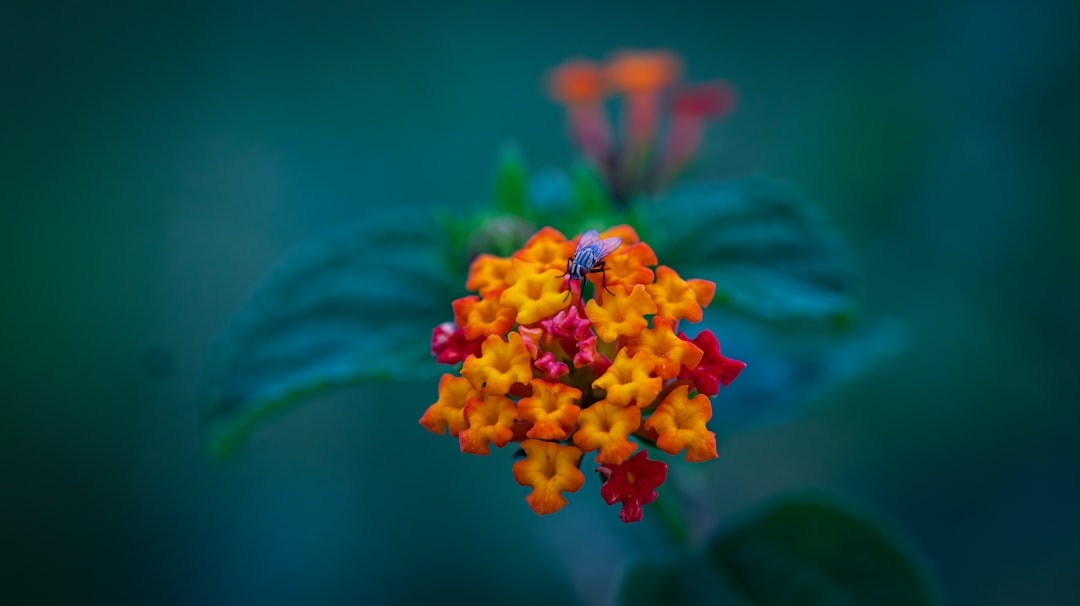
Natural purples tend to be more muted. The “electric” purple seen in flowers like the Vanda orchid or certain pansies is often the work of modern plant breeders.
True Oranges
Did you know that pure orange roses are rare in the wild? Most wild roses are pink, white, or red. Modern orange roses, like the ‘Tropicana’ hybrid, were first bred less than a century ago.
Metallic and Iridescent Blooms
Some species–like the rare “jade vine” (Strongylodon macrobotrys, turquoise) and the metallic blue-green “peacock anthurium”–have colors that don’t fit neatly into the rainbow. These are prized by botanical gardens and high-end florists alike.
Rarest Colors in Floristry: What Do US Florists Do?
In the real world of American floral design, rarity is both a challenge and a marketing tool.
Dyeing and Tinted Flowers
US flower wholesalers offer dyed blue roses, black calla lilies, and even spray-painted green chrysanthemums. According to a 2026 survey by the Society of American Florists, 17% of all “unusual colored” flowers sold were artificially colored.
Sourcing for Events
Luxury NY florist Fleur & Flour notes that brides requesting blue bouquets or black wedding flowers often need to special-order–sometimes at triple the cost of standard colors.
Pull-Quote
“When clients request colors that don’t exist in nature, we get creative–dye, paint, or sometimes silk flowers. But everyone is still drawn to something rare and real.”
– Maya Lane, Lead Designer, Fleur & Flour (Brooklyn, NY)
People’s Fascination With Rare Flower Colors
Cultural significance, symbolism, and the thrill of rarity add to the value.
- Blue flowers symbolize mystery and the unattainable–think Goethe’s poetic “Blue Flower” longing.
- Black blooms are associated with elegance, rebellion, and even mourning.
- Green blooms are said to signify renewal, luck, and uniqueness.
Florists, collectors, and botanical gardens across the US seek these for everything from Instagrammable arrangements to scientific display.
FAQ: Rarest Flower Colors
What is the rarest flower color in the world?
The rarest naturally occurring flower color is true blue. Pure blue pigments are absent in most plant species, with only a small percentage of wildflowers exhibiting a genuinely blue hue. Black and some vibrant greens are also extremely rare.
Are there any naturally black flowers?
No true black flowers exist in nature. What appears black is usually a very deep maroon, purple, or red caused by high concentrations of anthocyanin pigments. Examples include the Queen of Night tulip and Black Bat Flower.
Why are blue roses so rare?
Blue roses do not occur naturally because roses lack the specific gene to produce blue pigment. Most blue roses sold in the US are white varieties dyed with a blue floral tint.
Can I buy rare color flowers online in the US?
Yes, but expect to pay a premium. Online florists like UrbanStems, The Bouqs Co., and local US flower shops offer dyed blue and black blooms, and rare naturally colored flowers can cost 2-4x the price of standard red or pink varieties.
Are rare flower colors more expensive in the US?
Yes. Rarity, import costs, and special cultivation drive up the price. In 2026, a single stem of a true blue Himalayan poppy or imported black bat flower can fetch $10-$35, compared to $2-$4 for common colors.
How to Find or Grow Rare Flower Colors in 2026
If you’re chasing the botanical unicorn–whether for your garden, an unforgettable bouquet, or pure curiosity–start with specialty nurseries, online importers, or join a plant society. Some American florists now partner directly with breeders for limited releases of rare hues, especially around major holidays. If you’re a grower, experiment with soil pH and light–sometimes, small tweaks can coax surprising tones. And, if you ever spot that elusive true blue bloom in the wild? Snap a photo–then savor your lucky encounter.